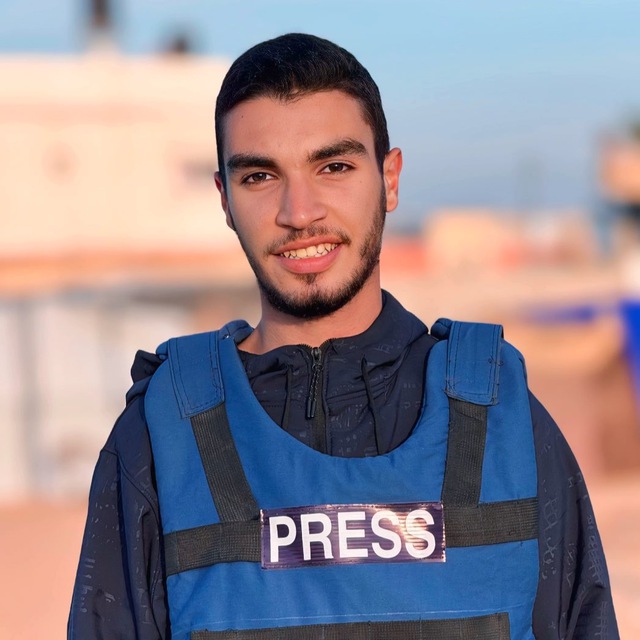
General Coordinator of the Network of Civil Society Organizations, Muhammad Salaha:
▪ The humanitarian situation in the Gaza Strip is worsening, and the humanitarian response is weak and limited because of the very limited quantities of aid allowed to enter.
▪ The need is estimated at about 800 to 1000 trucks per day, while the amount allowed to enter ranges between 200 and 260 trucks only.
▪ About 90% of the population in the Strip depend mainly on aid, which enters at a rate of about 40% only of the total number of trucks.
▪ Gaza will be on the verge of famine if the flow of aid remains weak, especially since most families cannot buy goods because of high prices and weak purchasing power.
▪ The unemployment rate exceeds 85% with many establishments shut down and the absence of the private sector, making recovery in the next stage very difficult.
▪ About 800,000 citizens live in dilapidated tents and need new tents, tarpaulins, and shelter supplies with the approach of winter.
▪ About 77% of the people of the Gaza Strip live in tents, and the number is increasing daily as a result of targeting homes and residential buildings and forcing citizens to flee to limited areas.
▪ All the people of the Gaza Strip live in about 30% only of the Strip's area, while 10% of this area lies adjacent to what is called the yellow line, making living there fraught with risk.
▪ The water crisis is worsening because of the توقف of water wells, especially in the eastern and northern areas of Gaza City and northern Gaza Strip, due to the توقف of generators and the lack of supplies needed to operate them.
▪ Citizens rely mainly on water provided by trucks, which does not exceed 60 to 80 liters per day for a family of 6 to 9 members.
▪ International organizations and United Nations agencies are currently unable to meet the scale of the large humanitarian needs because of the limited quantities allowed to enter the Strip.
▪ The occupation is trying to end the work of UNRWA in the Gaza Strip and the West Bank, and the main goal of this is to erase the refugee issue.
▪ Less than 40% of children in the Gaza Strip receive education services, while about 60% are deprived of education.
▪ If serious action is not taken, the educational situation will be catastrophic after two to three years because children in Gaza may complete primary school without going to school.
▪ The recovery process must begin with building schools or restoring them and bringing in the materials needed to operate them.
Related stories
Intense gunfire from الاحتلال vehicles toward displaced persons’ tents in the vicinity of Hamad City, north of Khan Younis city, south of the Gaza Strip
Renewed gunfire from occupation vehicles toward displaced persons' tents in the Mawasi of Rafah and southern Mawasi Khan Younis in the south of the Gaza Strip
Occupation tanks open heavy fire in the Al-Salatin and Al-Atatara areas west of Beit Lahia town in the northern Gaza Strip.