Intense gunfire from Israeli tanks coincides with artillery shelling east of Al-Tuffah neighborhood, east of Gaza City
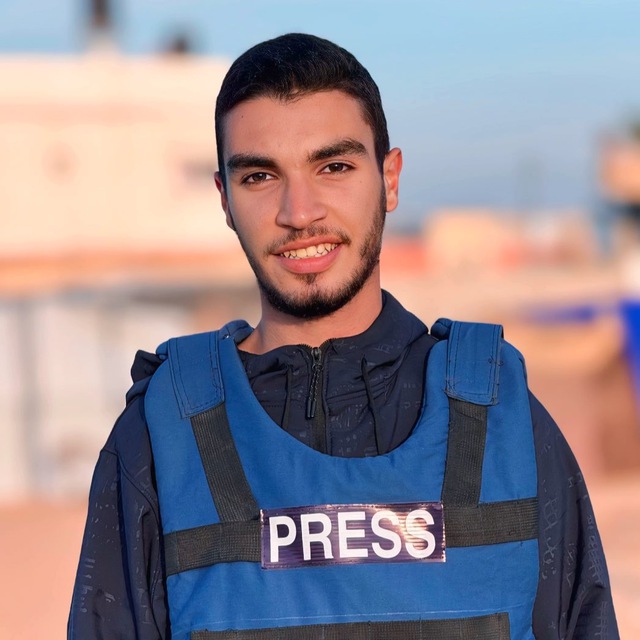 Ali Salem13 views
You may also like
Israeli artillery shelling east of Gaza City
Gaza Ministry of Health: 4 martyrs and 9 injuries, the total received by hospitals in the Gaza Strip during the past 24 hours.
Gaza Ministry of Health: ▪4 martyrs and 9 injuries, the total received by hospitals in the Gaza Strip during the past 24 hours. ▪1,505 martyrs and 5,332 injuries since the ceasefire on 11 October 2025 until today. ▪838 martyrs, the total bodies recovered (from under the rubble) since the beginning of the aggression. ▪74,396 martyrs and 175,449 injuries since the beginning of the aggression on 7 October 2033.
Gaza Government Media Office: We are closely monitoring the blatant campaign of disinformation and the false statement issued by the so-called “Coordinator of Government Activities in the Territories”
Gaza Government Media Office: ▪We are closely monitoring the blatant campaign of disinformation and the false statement issued by the so-called “Coordinator of Government Activities in the Territories,” through which he is trying, as usual, to promote false claims and fabricated accusations about the mechanisms for organizing commercial movement and the entry of goods into the Strip, inventing stories about forcing traders to pay money by force, distorting procedures for regulating cash circulation, and trying to hold the government apparatus in Gaza responsible for the disruption of truck entry. ▪In the face of this disinformation practiced by the occupation, which aims to evade humanitarian obligations and justify violations and threats to impose more restrictions that deepen the policy of starvation against our people, we have taken the initiative to put the relevant international and regional parties in the picture with the clear facts, as we have sent official letters and correspondence to the following: the mediators, the Arab Republic of Egypt, the State of Qatar, and the Republic of Turkiye; Ramiz Alakbarov, Acting Special Coordinator for the Middle East Peace Process; the UN Humanitarian Coordinator; Nikolay Mladenov, Executive Director of the Peace Council; and Ali Shath, Commissioner-General of the National Committee for Gaza Management. ▪We affirm our categorical rejection of these fabrications promoted by the occupation and categorically deny imposing any taxes or government fees on commercial trucks. ▪We affirm that we have not collected any taxes or fees on commercial activities throughout the past three years, taking into account the exceptional humanitarian and economic conditions we are experiencing in light of the war of genocide against the residents of the Gaza Strip. ▪As for what the occupation’s coordinator falsely referred to regarding the amount of (10,000 shekels), it is in fact linked to a “voluntary community initiative” in which a number of businessmen, personalities, institutions, and companies operating in the Strip participate within a national community contribution fund, and its resources are directed entirely to supporting the most vulnerable and affected groups (orphans, widows, women in need, children, and needy students), in addition to financing shelter, sanitation, and urgent relief projects, according to the highest humanitarian standards and considerations. ▪The procedures related to cash transactions (at a rate of 30%) that the occupation tried to distort came as an inevitable necessity to address the severe imbalances in the Palestinian market, foremost among them the severe shortage of cash liquidity and the spread of worn-out banknotes, and the resulting increase in citizens’ suffering and the disruption of buying and selling operations and the settlement of daily transactions. ▪We affirm that this approach was not a unilateral government decision, but rather came in full agreement with the Chamber of Commerce and at its initiative, in response to the challenges facing market activity. ▪Reducing these regulatory measures to claims of “controlling money,” without verifying their nature and objectives, is a purely misleading conclusion that lacks objectivity, and through which the occupation seeks to justify policies of restriction and starvation against our Palestinian people. We affirm our full readiness to clarify the regulatory bases of these procedures before the competent international bodies. ▪The government apparatus in the Gaza Strip is committed, out of its responsibilities, to applying Palestinian law and combating the monopolization of essential goods, price manipulation, and exploiting citizens’ needs to achieve illegitimate gains under harsh humanitarian conditions, and we will not leave our people prey to any attempts at monopoly, manipulation, or exploitation. ▪Any procedures taken against some traders are based solely on suspicions and violations that require legal accountability, including suspicions of illicit gain, and are fully subject to the legal and judicial principles and procedures in force in Palestine and in the Gaza Strip specifically. ▪We strongly reject the occupation’s attempt to build general conclusions on individual cases whose circumstances were not presented in full, and to exploit them to portray them as a campaign of forced collection. We are fully prepared to provide all documents and testimonies for an objective verification of the reasons for those lawful and justified measures. ▪Our top and urgent priority is ensuring the regular and sufficient flow of goods. Accordingly, the announced understandings, including what was agreed upon in the Sharm el-Sheikh track, obligate the occupation government headed by the criminal “Netanyahu” to implement its commitments to allow aid and supplies to enter, specifically the entry of (600) trucks per day. ▪We stress our categorical rejection of allowing any reduction or obstruction of this commitment, or linking its implementation to flimsy claims about regulating the internal market. ▪We also reject any attempt to hold the government apparatus responsible for reducing the entry of trucks, as the استمرار of these restrictions deepens the humanitarian and economic crisis and hinders the provision of food, medicine, and shelter.